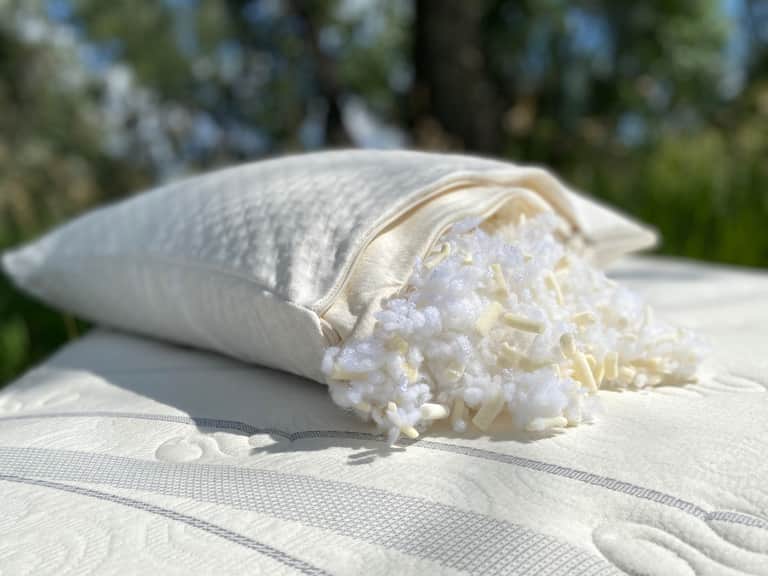
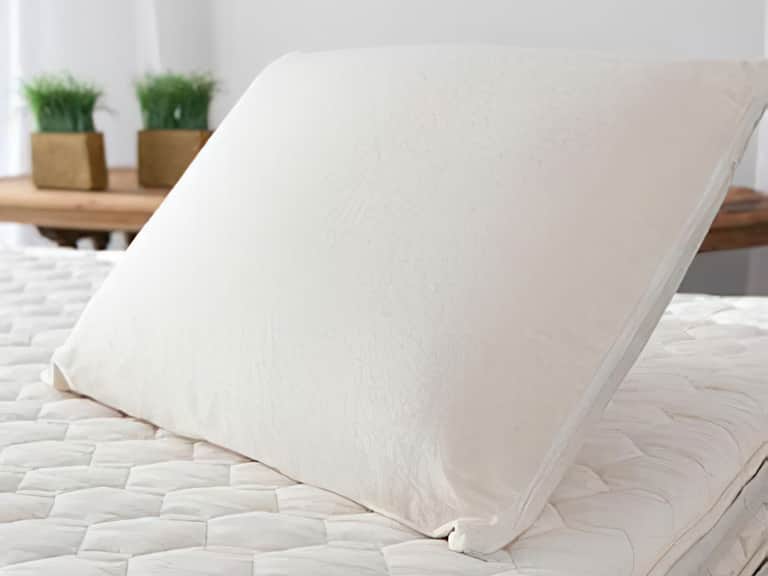
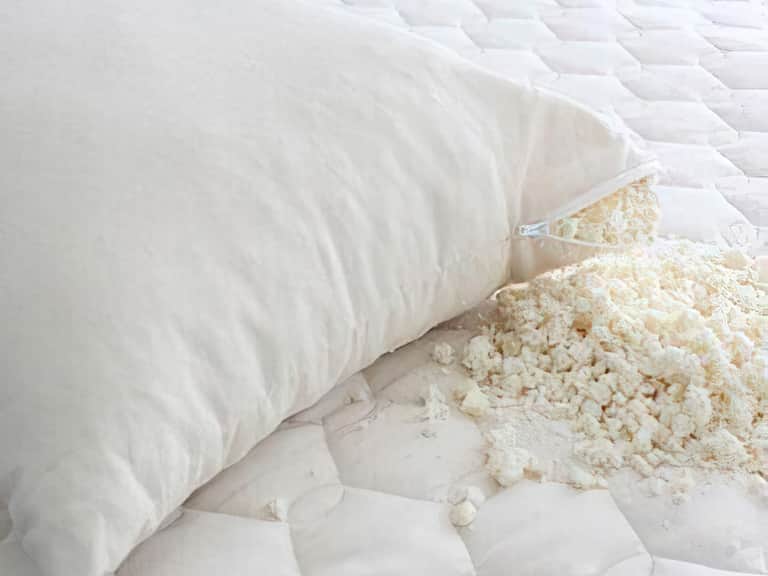
Latex, derived from natural rubber trees, offers a resilient and breathable material widely used in bedding to provide supportive, responsive sleep surfaces. In the context of pillows, latex blends often combine the durability of latex with fabrics or additives to enhance comfort, hygiene, and temperature regulation. The resulting core can maintain shape while allowing airflow to help regulate sleeping temperature for varied positions.
Among latex-based options, shredded latex-Tencel™ blend pillows emphasize adaptability. The shredded composition allows for customizable loft and contouring, while Tencel™ fibers contribute moisture-wicking and silky-smooth comfort. This combination supports spinal alignment and reduces pressure points for side, back, and stomach sleepers alike.
Another key latex option is the Latex & Wool Pillow, which merges latex’s buoyant support with natural wool for added softness and insulation. Wool fibers help regulate temperature and wick moisture, contributing to a drier feel during sleep. The pillow’s structure promotes even fill distribution to minimize lumping and maintain consistent support throughout the night.
In terms of functional benefits, latex-based pillows typically resist mold and dust mites due to inherent antimicrobial properties and dense cell structure. They also recover quickly after compression, sustaining loft over time. When properly chosen for firmness and height, latex pillows can align the neck and spine, potentially alleviating neck strain and improving overall comfort across sleep positions.
For bedding considerations, latex products complement memory foam and other pillow types by offering a breathable, resilient core. The combination of natural materials and engineered blends supports long-term usability, while maintaining a supportive feel that adapts to user movements. Keywords such as bedding, pillows, memory foam pillows, travel pillows, and latex reflect the category’s relevance to diverse sleep needs.
 Bedding