How to Choose the Right Wedge Pillow for Better Sleep and Posture
A wedge pillow is not merely a cushion; it is a strategic ally in the anatomy of rest. By elevating the head, neck, or legs, it reshapes the arc of your spine and the tempo of your breathing. This guide walks you through how to read the geometry of a wedge, the physics of materials, and the psychology of sleep so you can select a pillow that harmonizes with your body, your routine, and your aspirations for a more comfortable night.
From the annals of sleep science to the quiet rituals of modern bedding, wedge pillows occupy a space where medical efficacy meets everyday comfort. They are particularly valued by people who wrestle with neck pain, acid reflux, or post-surgical recovery, but their appeal extends to anyone seeking to optimize spinal alignment and elevate sleeping comfort. The wedge's angle—often between 15 and 45 degrees—plus its height, cover fabric, and core material, all interact to determine whether a pillow soothes the shoulders or leaves the hips misaligned.
In our exploration, we lean on a multifaceted lens: ergonomic anatomy, material science, and real-world usage across time periods. We trace a thread from historical pillows crafted for posture, to contemporary innovations in memory foam, latex, and organic fillings, and we spotlight a modern practitioner’s selection from Sleep and Beyond—the Sleep and Beyond MyMerino Organic Wool Pillow—as a case study in how natural fibers can deliver breathability and temperature regulation alongside supportive loft.
Understanding wedge geometry and sleeping positions
The wedge pillow is a carefully calibrated incline. The angle and height cooperate with your preferred sleep posture to tilt the torso rather than the head alone. For reflux relief, a gentler slope that raises the upper body without compressing the chest is ideal. For neck pain, a wedge with a higher contour around the neck can offer the necessary cervical support while preserving spinal alignment. For legs elevation, a thinner wedge placed under the knees or calves can ease tension in the lower back and hips.
Historically, comfort pillows have evolved from simple rectangular cushions into purpose-built supports. The wedge design is a mid-century refinement that acknowledges the body's sagittal curves. In modern times, the wedge comes in a spectrum: low-profile foams for subtle elevation; medium wedges for mid-range adjustments; and higher, more contoured variants tailored to specific pain points. The choice hinges on the relationship between your neck curvature, thoracic posture, and the angle at which your spine remains in a natural alignment when lying supine or semi-reclined.
Key takeaway: pick a wedge based on the sleeping position you most often use. If you sleep primarily on your back and seek relief from reflux, a wedge with a modest angle may be preferable. If you sleep on your side, you might lean toward a wedge paired with a complementary pillow to maintain shoulder clearance and spinal neutrality.
Materials: memory foam, latex, and organic options
The inner core—whether memory foam, latex, or natural fills—defines how a wedge responds to weight, heat, and movement. Memory foam conforms to your contours, offering steady pressure relief and a predictable loft that remains stable as you shift positions. Latex, especially in Dunlop or Talalay variants, tends to be more breathable, resilient, and buoyant, providing a springy lift and robust edge support. Organic options, including wool or kapok, emphasize natural fibers that regulate temperature and resist dust mites, appealing to sleepers seeking a non-toxic or eco-conscious solution.
In the contemporary landscape, a high-quality wedge often blends materials for a balance of contouring and airflow. A memory-foam wedge with a breathable cover might be ideal for reflux and neck support, while a latex wedge can offer longer-term resilience and a cooler resting surface. Organic wool or kapok-filled overlays can layer onto a foam core to temper heat while preserving loft. Your choice should align with tolerance for heat, need for support, and any allergies or sensitivities.
A rising trend is to pair a wedge with a pillow that complements the incline—creating a synchronized stack that supports the cervical spine and reduces neck strain. A merino wool-filled pillow, such as Sleep and Beyond MyMerino Organic Wool Pillow, can contribute breathable comfort and regulate temperature as you rest on the incline.
A noteworthy product in this space
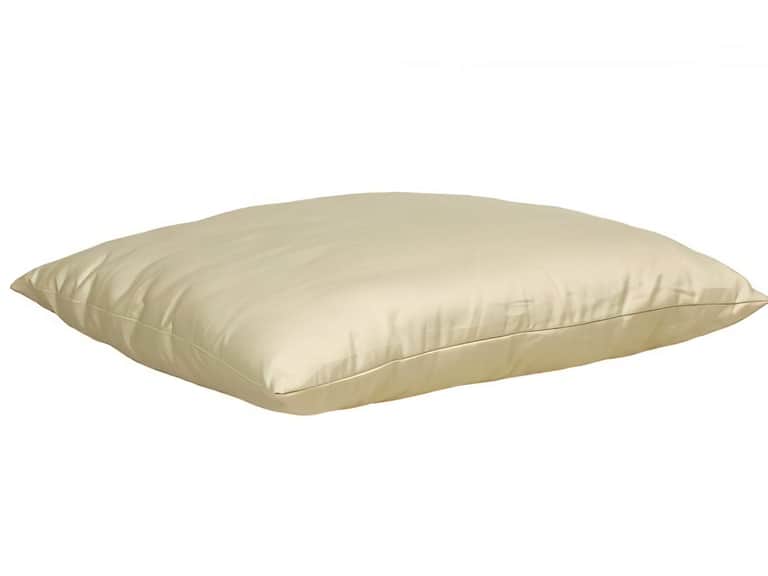
Sleep and Beyond MyMerino Organic Wool Pillow
Brand: Sleep and Beyond
Filled with fine certified organic merino wool, this pillow is hypoallergenic and provides superior comfort. Wool helps regulate temperature and wicks away moisture, keeping your pillow dry. The pillow is dust-mite resistant and free of carcinogenic chemicals, enclosed in a certified organic cotton cover. Manufacturer warranty is 5 years.
Price: $139.00
Note: The image above is illustrative. Availability and colors may vary by stock.
Time-tested personalities who shaped sleep comfort
Throughout history, writers and scientists have reflected on rest as a physiological and almost philosophical act. These three figures, from different eras, illuminate the spectrum of how we conceive support, posture, and the ritual of slumber:
- Hypatia of Alexandria (c. 350–415 CE) — A thinker who embodies the long arc of human curiosity, Hypatia’s era was less about pillows and more about the science of healing in the classical world. While the wedge pillow as we know it did not exist, her insistence on empirical reasoning seeded a modern approach to ergonomic comfort: understand the body, then tailor tools to support it.
- Jane Goodall (born 1934) — Though known for primatology, Goodall’s work reminds us that comfort and welfare matter across species. In sleep ergonomics, her humanistic lens encourages us to design products that respect natural sleeping rhythms and minimize harm to the environment, a principle that underwrites organic fillings and sustainable production in wedge pillows today.
- Dr. Atul Gawande (born 1965) — A surgeon and writer who has long argued for better systems of care, not just better tools. Gawande’s ethos translates into wedge pillows as pragmatic, evidence-informed decisions: test materials for breathability, balance loft with alignment, and match product choice to patient needs and daily routines.
Practical considerations: matching wedge pillows to concerns
Neck pain, reflux, post-surgical recovery, or sleep apnea can all influence wedge pillow choice. Here are practical guidelines to pair concerns with wedge characteristics:
Prioritize a wedge with a higher profile behind the neck or a contoured top surface that cradles the neck without forcing the head forward. A modest incline—generally 15° to 30°—helps reduce nighttime symptoms while allowing the chest to rise comfortably. A wedge placed under the knees or calves can relieve lower-back tension and promote improved circulation, often in conjunction with a separate leg pillow or a lower wedge. If heat is a concern, lean toward latex or breathable memory-foam hybrids, or add a woolly overlay that keeps warmth in check while preserving loft.
In a modern shopping context, an informed consumer looks not only at the core material but at the total ecosystem: the cover fabric, the washability, the warranty, and how the wedge plays with other sleep aids. For instance, pairing a wedge with Sleep and Beyond MyMerino Organic Wool Pillow is a tactile marriage of temperature regulation and support, offering a comforting parable of how natural fibers and contouring can coexist with engineered resilience.
Quick-start tips for selecting your wedge pillow
- Assess your primary sleep position and symptom profile.
- Choose a wedge height that allows a natural neck angle without excessive extension or flexion.
- Prefer breathable, non-toxic materials if you are sensitive to heat or chemical exposures.
- Consider modular options or a pillow stack that lets you fine-tune loft as your needs change.
- Read reviews that address real-world comfort, not just lab specs—especially regarding temperature and durability.
Bringing it all together: a recommended setup
Imagine a sleep environment where the wedge supports a gentle elevation of the upper torso, a memory-foam core provides a stable contour, and a merino-wool pillow nestles behind the neck to regulate temperature. Such a setup harmonizes the spine’s natural curve, reduces pressure points, and contributes to an undisturbed night. This is not a single-ingredient recipe but a balanced ensemble where materials, geometry, and user preference converge.
In practice, you might begin with a modest wedge—say a 7 to 12-inch height at a 20–25 degree incline. Add a contoured memory-foam travel pillow or a merino wool pillow behind the neck to optimize cervical support. If heat emerges as a barrier, layer a wool pad or a breathable cover to maintain airflow. This modular approach mirrors the ethos of contemporary bedding design: flexibility, health-conscious materials, and a respect for the living geometry of the human body.
Conclusion: a wedge for every sleeper
The wedge pillow is a compact instrument in the orchestra of sleep. Its value lies not in dramatic claims but in the quiet alignment of form and function: the lift that opens the airways, the contour that reduces neck strain, the breath that returns to a steady, even rhythm. Across history and into the present, the impulse remains the same: to connect science, comfort, and care in a single, soft revolution of the night.
As you consider options—from memory foam wedges to latex-inflated designs and organic wool overlays—remember that the best choice honors both your body and your daily life. The right wedge does not merely prop you up; it invites your spine to breathe, your muscles to soften, and your mind to accept the promise of a restorative dawn.